Course Title: Human Anatomy & Physiology
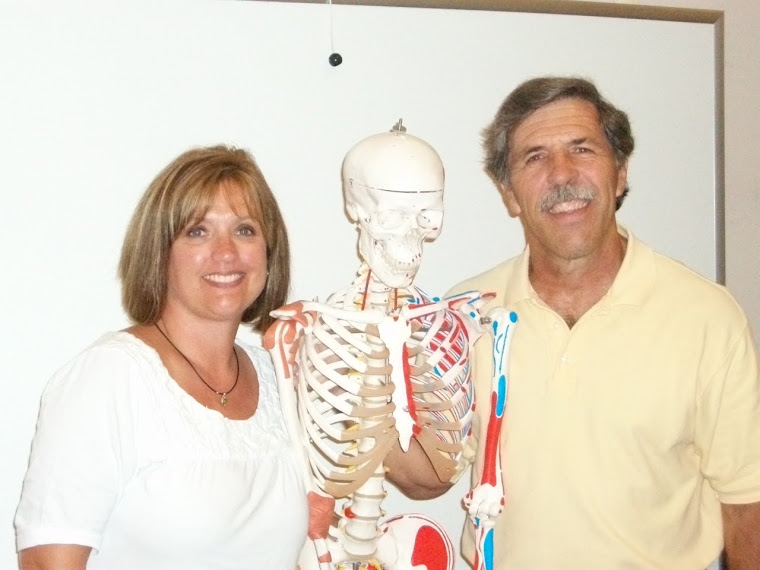
Instructors: Mr. Tom Heilman, Mrs. Kelly Pike
Contact Information: theilman@hcpolytech.org and tomheilman@hotmail.com; kpike@hcpolytech.org; both by phone at 908-806-3855 x125
Class Information: The course meets Monday through Friday, in the morning at the Bartles Campus. Central students receive 20 credits, and all other students receive 15.
1. Course Description
This is a college level course and the first in the sequence and it serves as a prerequisite for student interested in pursuing a career in nursing or most other health care fields. The structure and function of the human organism are studied. Special emphasis is given to interrelationships of organs and organ systems. Cellular morphology and function are included. The student is introduced to basic chemistry, the cell, basic tissues, and each of the body systems, as outlined below. After completing the other nursing courses offered through the junior and senior years, students who are eligible upon high school graduation may enter into the nursing program at Raritan Valley Community College, bypassing the 2-3 year waiting list.
2. Instructional Philosophy
Students will be expected to meet all the course goals listed below and be able to demonstrate their understanding of underlying concepts. The instruction will be a combination of laboratory and application based, as well as lecture and demonstration. The course requires extensive student research and completion of experiments and projects. Students will work in teams to complete several projects that enable them to learn how to work independently to plan, construct, and trouble shoot various situations. Assignments will require students to draw upon academic skills in mathematics, science, and language arts.
A variety of teaching modalities will be used to convey the course content to the students. This will include but is not limited to: textbook and lab book reading assignments, PowerPoint lectures using given chapter outlines; labs that include: dissections, microscope slide viewing and analysis, wet chemistry labs, physiology labs using computer interface equipment, physiology labs with computer simulations; anatomy coloring pages, DVD and VCR movies, field trips, and using many aspects of the textbook website. Classroom COW computers will be used for many of these activities.
Students will be given more than one opportunity to complete assignments to meet course standards through a “test correction” procedure, but all students will complete course requirements at a minimum of 76%. To help meet this requirement, students will learn how to evaluate their own progress and make adjustments as needed throughout the course. Students will also have extra credit opportunities as each marking period comes to a close. These will afford students an opportunity to improve their grade up to 3%.
3. Course Content: Textbook: Anatomy & Physiology 3rd edition by Marieb and Hoehn
• Anatomy & Physiology I:
- Chapter 1: An orientation to the human body
- Chapter 2: Basic chemistry and biochemistry
- Chapter 3: The structure and function of cells
- Chapter 4: Body tissue structure and function
- Chapter 5: The integumentary system
- Chapter 6: Bones and skeletal tissue
- Chapter 7: The skeleton
- Chapter 8: Joints
- Chapter 9: Muscles and muscle tissue
- Chapter 10: The muscular system
- Chapter 11: Fundamentals of the nervous system and nervous tissue
- Chapter 12: The central nervous system
- Chapter 13: The peripheral nervous system and reflex activity
- Chapter 14: The autonomic nervous system
• Anatomy & Physiology II:
- Chapter 15: The endocrine system
- Chapter 16: Blood
- Chapter 17: The cardiovascular system: the heart
- Chapter 18: The cardiovascular system: blood vessels
- Chapter 19: The lymphatic system
- Chapter 20: The immune system
- Chapter 21: The respiratory system
- Chapter 22: The digestive system
- Chapter 23: Nutrition, metabolism, body temperature regulation
- Chapter 24: The urinary system
- Chapter 25: Fluid, electrolyte, acid-base balance
- Chapter 26: The reproductive system
4. Course Goals
Students will learn how to:
• Demonstrate knowledge of the body organization of humans and other mammals.
• Demonstrate knowledge of tissue structure and organization in humans and other mammals.
• Identify structural and functional aspects of human histology.
• Identify structural and functional aspects of each of the main human systems: skeletal, muscular, circulatory, respiratory, digestive, nervous, endocrine, excretory, and reproductive.
• Dissect and identify all of the structural functional aspects of the cat systems as listed above.
• Conduct computer interface and computer simulation physiology experiments on the various human body systems to collect and analyze real time data.
• Prepare for cumulative tests of anatomy and physiology presented by Raritan Valley Community College (RVCC) and the University of Medicine and Dentistry of New Jersey (UMDNJ).
5. Major Course Projects
Students will be expected to:
• Read and prepare text and lab assignments in conjunction with daily lessons.
• Read associated literacy assignments throughout the academic year.
• Complete chapter outlines using lap tops in association with chapter Power Points and available on the class web blog.
• Complete hands on lab assignments on a daily basis in conjunction with Power Point presentations.
• Prepare for unit tests to assess student knowledge of the major topics of the course.
• Use the class web blog as the focal point of the class and develop their own blogs for the course.
6. Instructional Delivery Plan
The evaluation and grading system is introduced at the beginning of the course to advise students of the standards they will be expected to meet to pass the course and achieve their best possible grades.
Class Operation: The teacher provides direction and manages the class but gives students as much responsibility as possible to complete projects and manage their time within the given framework. Anatomy will formally run three days a week with Mr. Heilman, usually on Mondays, Wednesdays, and Fridays, although there may be some adjustment from week to week. Tuesdays and Thursdays will usually be with Mrs. Pike and include some time for Anatomy homework and classwork, but also devoted to Dynamics of Healthcare. Anatomy class will typically be structured as:
• 7:30 – 8:15 independent work time, as all students arrive from the various school districts.
• 8:15 – 9:00 direct instruction time, usually through Power Point notes. The teacher conducts class discussions to emphasize key points, check student understandings, and prevent gaps in overall progress. Students are called upon to explain selected concepts in class. The evaluation system, which is used to measure qualitative as well as quantitative aspects of student performance, is clearly stated and is explained in the beginning.
• 9:00 – 9:45 lab time. Usually these may be done with one partner.
• 9:45 cleanup.
Monitoring, evaluating, and grading performance: Each student is required to keep a three ring binder of all work related to the class that is kept on paper. Grades will be kept on the Engrade web site, will be updated at least weekly, and are available for students and their parents. It is the student’s responsibility to keep track of any missed work, and to complete that work as soon as possible.
7. Assessment Plan
Grades for the course will be based on the following levels of performance:
GRADE PERFORMANCE STANDARD
A Independent Learner
Did research, designed and planned; applied academic skills; evaluated work and made adjustments; did quality work; needed little help from the teacher; sought and found resources independently; demonstrated knowledge with a grade of 92 of higher; produced a quality portfolio
B Semi-Independent Learner
Did research; designed and planned; needed some help from the teacher; did quality work with a few flaws; needed feedback from the teacher to realize work did not meet standards; redid work to meet standards; demonstrated knowledge with a grade of 84 or higher produced a better than average portfolio
C Dependent Learner
Needed to help research, design and plan or had to be given a plan; relied a great deal on the teacher; had to be given procedures for performing tasks; required significant help to produce a quality produce; needed help to evaluate a final product; final product still did not meet standards; demonstrated knowledge with a grade of 76 or higher; produced an average portfolio
F Failure
Did not complete projects; if projects were completed they were of such low quality that they did not pass; failure to document procedures; did not show criteria for determining quality; scored less than 68 on knowledge tests; produced a poor portfolio or none at all
Student Evaluation:
A & P I and II are RVCC courses taught at Polytech, so the grade scales at both schools are enacted as they are reported to each administration. Grades are based on a percentage of the total points accumulated at the end of each grading period. Grades for each semester are determined as follows: each of the two grading quarterly grades = 40%, final exam = 20%. The percentage grade scales are as follows:
Polytech: RVCC:
A = 92-100 A = 90-100
B = 84-91.99 B+ = 85-89.99
C = 76-83.99 B = 80-84.99
I = below 76 C+ = 75-79.99
C = 70-74.99
D = 60-69.99
F = below 60
• At Polytech an “I” turns into an “F” if not improved after two weeks of the report period.
• Nursing students need a minimum of a C to pass this course on the RVCC scale according to RVCC standards.
• At Polytech a final letter grade for the school year will be obtained by averaging the midterm (A&P I final) and final (A&P II final). This will function numerically as a “fifth marking period.” Each of the “five” marking period grades will be averaged together to get a final letter grade.
Mr. Heilman & Mrs. Pike

No comments:
Post a Comment
Note: Only a member of this blog may post a comment.